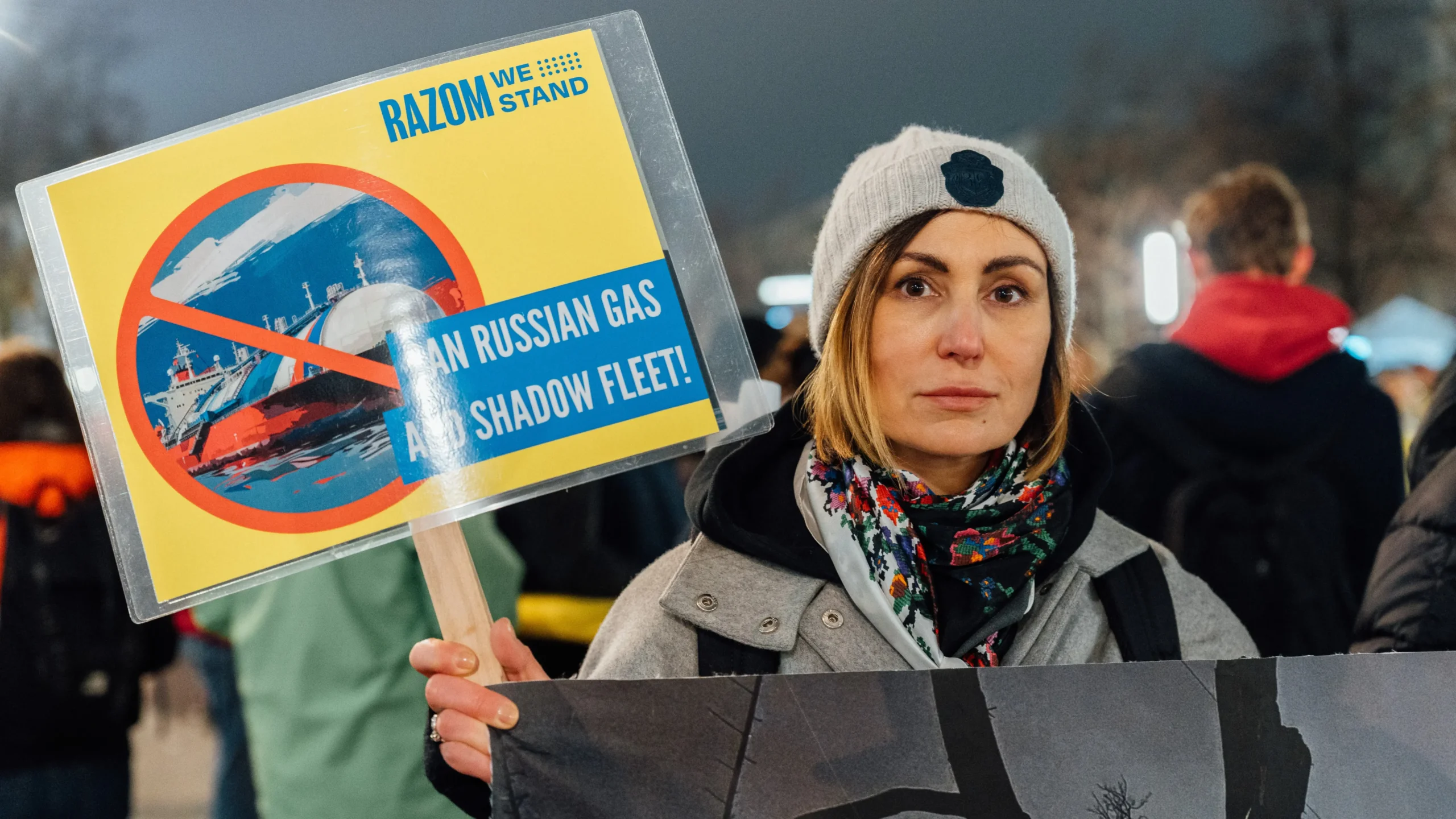
A new report, Europe’s Break from Russian Fossil Fuels, shows how Europe has begun to break structurally from Russian coal, oil and gas, but risks swapping one fossil dependency for another unless it doubles down on electrification rather than new LNG.
EU coal imports from Russia have fallen to zero since the 2022 embargo, and Russian crude oil’s share of EU imports has dropped from around a quarter pre‑war to only a few percent. Russian pipeline gas has collapsed from about 45% of the EU gas supply before 2022 to roughly 12% share by 2025, largely due to Russia’s own cuts and new EU regulations that now fix a full gas phase‑out timetable.
As Russian pipeline volumes shrank, the EU filled the gap with LNG, importing over 140 bcm of LNG in 2025, including around 20 bcm of Russian LNG and rapidly rising volumes from the United States. By 2025–2026, the US had become the EU’s largest single LNG supplier, providing well over a quarter of EU gas imports and a majority of LNG cargoes, creating a new concentration risk in the event of US policy shifts or global market shocks.
EU policy now recognises that the only durable way out of fossil and geopolitical risk is to cut gas demand through electrification, not simply to reshuffle suppliers. Renewables already produce nearly half of EU electricity, yet electricity still accounts for only about 23% of final energy use, prompting the Electrification Action Plan and heating and cooling strategy to accelerate heat pumps, clean industrial processes, and electric transport. In this framing, completing the break from Russian coal, oil, and gas goes hand in hand with avoiding a long-term US LNG lock-in by rapidly expanding homegrown renewables and electrified end uses rather than signing new fossil contracts.