Notes on ‘Investing in Ukraine: From Projects to Partnerships’ in London, UK at EBRD London on February 12, 2026.
By Dr. Svitlana Romanko
There is a subtle but important shift in how Ukraine is discussed in international forums. Not long ago, panels focused on humanitarian relief and macro-stabilisation. Now, the conversation is about capital markets, export finance, green steel, defence manufacturing, logistics corridors and critical minerals. Ukraine is no longer being framed as a country waiting for peace. It is being framed as a country preparing to anchor Europe’s next industrial cycle.
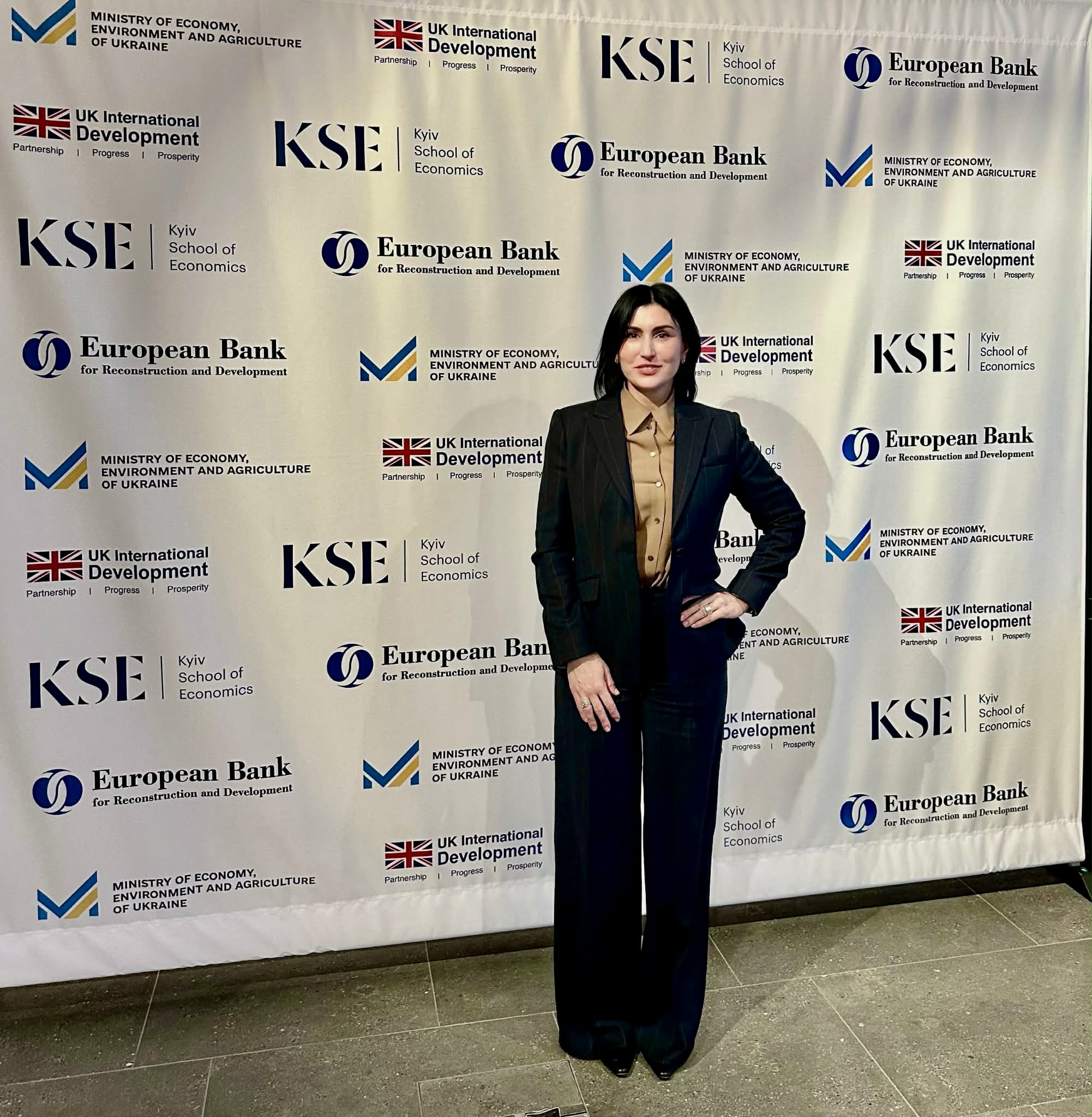
At the recent high-level investment conference, organised by KSE, Ukrainian Ministries, FCDO and EBRD in London, which I attended on February 12, 2026, the panels were operational and thought-provoking. The conference set out a pragmatic case for investing in Ukraine despite the war, pointing to 4% projected growth, the planned privatisation of 74% of state-owned enterprises, strong banking liquidity, €90bn in EU support over two years, and new insurance and sovereign-backed mechanisms to reduce investor risk. It also highlighted deep structural reform — from digital anti-corruption tools and the Ukraine Invest portal to 80% alignment with EU accession standards — positioning Ukraine not only as a frontline state, but as an emerging, rules-based European economy.
Yegor Perelyhin, Deputy Minister of Economy, spoke with a clarity that would have been unthinkable five years ago – 74% of Ukraine’s state-owned enterprises are in the exit perimeter. Only 16% will remain strategic state assets. More than 450 assets are in the privatisation pipeline. Since 2018, over 10,000 electronic auctions have been conducted via Prozorro.Sale, generating $612 million in signed deals with an average of 3.8 bidders per auction. We have entered the phase of not reform theatre, but of a structural re-engineering of the state.
David Lorello of Covington & Burling and the British-Ukrainian Chamber of Commerce framed it more bluntly – capital is not allergic to risk; it is allergic to opacity. Ukraine’s task, he argued, is not to eliminate risk – no country at war can – but to price and structure it. Anthony Doherty from Kingspan spoke from the perspective of a company that has already invested during the war. His point was simple – investors follow systems, not sentiment. When regulatory frameworks align with EU standards and derisking instruments are real, capital moves. And the derisking architecture is no longer theoretical.
Slides laid out a matrix of instruments now available: IFIs, bilateral DFIs, export credit agencies, private equity, political risk insurance, war risk insurance, blended finance, and sovereign guarantees. UK Export Finance alone has backed £26.3m for bridge reconstruction near Kyiv, structured up to £1.6bn in defence export finance, and participated in $100m co-financing in agriculture. British international investment is already structuring transactions and working on capital mobilisation.
But what struck me most was the geology. Ukraine’s critical minerals and green steel investment pipeline amounts to $33.4 billion. Lithium projects at €4.5bn. Titanium expansion at €2.9bn. Graphite at €0.9bn. Green steel at €12.2bn, and up to 12.5 million tonnes annually. Hot-briquetted iron (HBI) and Direct Reduced Iron (DRI) production at €4.1bn. Ukraine holds 6% of global titanium concentrate production, 8% of global graphite reserves, and some of Europe’s largest lithium deposits.
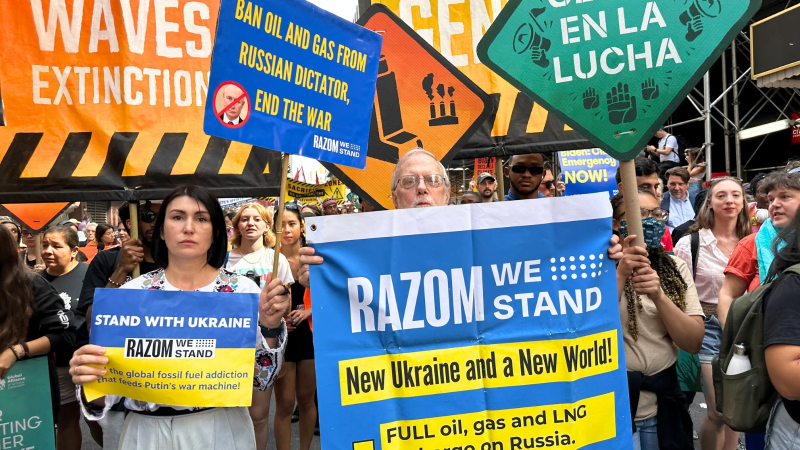
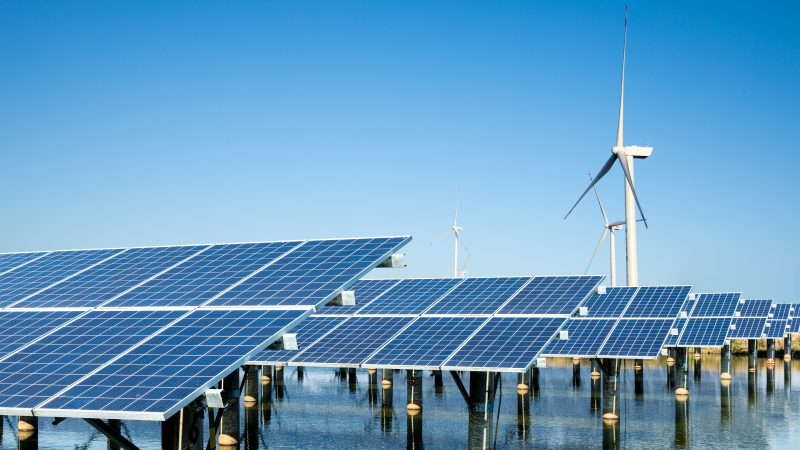
In a world scrambling to reduce its dependence on China and Russia, these are not minor statistics but major security issues. The energy panel was equally revealing. Ukraine is positioning itself as a renewable hub with over 750 GW of potential capacity. It is a major natural gas storage partner for the EU. It aims to become a centre for green hydrogen production. The implicit argument was clear – Ukraine’s reconstruction can either restore the old fossil order or leapfrog into decentralised, renewable, integrated systems. This is where Razom We Stand enters the debate.
We are not an investment bank; we are a climate and energy security organisation. But we understand something that pure finance sometimes misses – investments are not neutral.
Capital choices shape power structures. Our investment principles are: decentralised, clean energy first; no expansion of fossil infrastructure; value-added processing inside Ukraine; community ownership models; transparency and anti-corruption safeguards; alignment with the EU Green Deal & CBAM; and prioritisation of local jobs and workforce transition. Reconstruction must accelerate decarbonisation, not delay it, and must align with three principles.
First, energy must decentralise. Centralised fossil infrastructure is not only carbon-intensive; it is a military vulnerability. Russian strikes have shown this repeatedly. Solar-plus-storage microgrids in hospitals and municipalities are not symbolic green projects. They are a core part of vital security infrastructure.
Second, business in critical minerals must not recreate extractive oligarchic models. Lithium and titanium must be embedded into transparent, EU-aligned value chains with environmental and community safeguards.
Third, cities must be engines of clean transition, not passive recipients of reconstruction. Our city-level investment portfolio reflects this, remaining relevant as never before, whilst the city infrastructure is under massive destruction.
We are working with municipalities to structure renewable deployment packages that combine microgrids, rooftop solar, battery storage, district heating modernisation and energy-efficiency retrofits. In frontline regions, we see the resilient microgrids as a first priority. In industrial regions, we focus on electrification and clean heat. In Western cities, we support the electrification of logistics and the integration of clean public transport. These projects are designed as replicable investment platforms that can absorb blended finance and political risk insurance.
If Ukraine is to mobilise $33 billion in minerals and $56 billion in transport infrastructure, its cities must be able to host and anchor that growth. Infrastructure must incorporate local resilience to be strong. Visionary long-term growth must prioritise decarbonisation. These are the issues we must address to build a successful and thriving Ukraine.