By Dr. Svitlana Romanko
The 62nd Munich Security Conference convened under the stark theme “Under Destruction”, an acknowledgement that the post-Cold War order is not quietly fading but being actively dismantled. Ukraine was not a side issue; it was the centre of gravity. Across panels and private meetings, leaders spoke about defence, deterrence and resilience. Sanctions on Russia were discussed soundly and loudly.
European Commission President Ursula von der Leyen reaffirmed that Europe must strengthen sanctions and enforcement. Energy commissioner Dan Jørgensen was clear that Europe’s security depends on accelerating the transition away from fossil fuels. The connection between energy dependence and geopolitical vulnerability is now widely recognised. But recognition is not yet a resolution.
The US Secretary of State Marco Rubio warned in Munich that critical minerals are too often controlled by adversaries and rivals, leaving democracies exposed. He is right about the risk. But the solution is not a new geopolitical land rush. Ukraine’s mineral wealth must not become another chapter in extractive exploitation. A clean energy future built on unjust extraction is no better than the fossil-fuelled past. Ukraine’s reconstruction must link its fossil fuel exit with responsible mineral governance inside and outside the country, ensuring that its reserves serve domestic clean reindustrialisation, democratic recovery, and Europe’s energy transition, not opaque corporate interests in countries with more developed extractive economies. Dependence on critical minerals must not become the 21st century’s version of oil dependency, a new faultline along which wars are fought, and sovereignty is traded. If the clean energy transition merely swaps oil and gas pipelines for lithium mines, without transparency, democratic control and community rights, we will reproduce the very dynamics that fuelled fossil-driven conflict. Ukraine is a hard reminder of what happens when strategic resources are concentrated in the wrong hands: they become tools of pressure and sources of conflict, not foundations of security. A genuine energy transition must not create new sacrifice zones or new geopolitical choke points. It must break with the extractive logic of the past or risk repeating it.
The most consequential discussion I attended in Munich was a sideline event titled “Making Russia Pay: Next Steps on Frozen Russian Assets and Ukraine’s Reconstruction”. Ministers and legal experts confronted the financial architecture of russian accountability for the war in Ukraine. Around €300bn in Russian state assets remain frozen in G7 jurisdictions. Roughly €190bn sits in Belgium’s Euroclear; another €20bn in France. Meanwhile, verified damage to Ukraine exceeds $524bn and rises daily. In December 2025, the EU legislated to indefinitely immobilise Russian state assets until Russia ends its aggression and pays reparations. The EU and 34 countries established an International Claims Commission for Ukraine. A €90bn EU defence loan through 2027 was agreed, backed by immobilised reserves.
These are historic measures. But they stop short of justice. Only windfall profits — about €3bn annually — are being used. The principal remains untouched. The €90bn facility will expire by 2027. Without a durable mechanism to transfer assets toward compensation, Ukraine will once again face funding gaps while Russia continues its war. Legal clarity exists already. Under international law, Russia owes reparations to Ukraine. Indefinite immobilisation is already a lawful countermeasure. There is no material legal difference between holding assets indefinitely and ultimately applying them to compensation. The barrier is political hesitation that we observe and fight both in sanctions and assets in the area of russia’s accountability.
At the same time, Europe and the UK continue to leave open the energy channels that fund this war. Russia’s brutal attacks on Ukraine’s energy infrastructure, even in temperatures of minus 20C, are financed by fossil fuel exports. Europe still imports russian gas. Shadow fleet tankers continue to circumvent sanctions. UK-linked shipping and insurance firms remain entangled in global russian LNG flows. Oil and gas are Europe’s weak spot. Russia works relentlessly to keep that weak spot open.
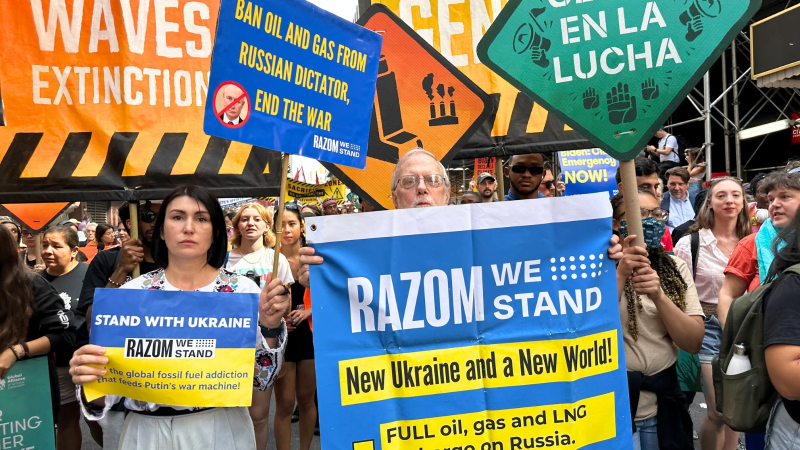
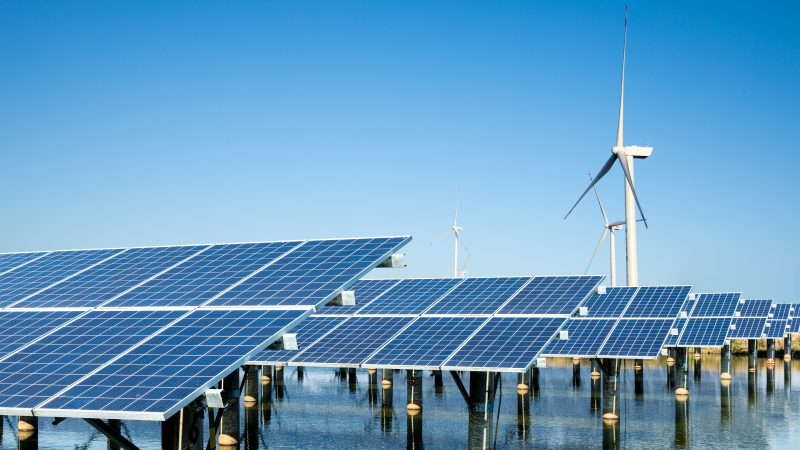
At Razom We Stand, we know that energy and finance are the core of this war. If fossil revenues continue, aggression continues. If frozen assets remain symbolic, deterrence remains rhetorical. Real energy security is cheaper, cleaner and sovereign. Renewables already supply nearly 45% of the UK’s electricity mix, up from 15% a decade ago. Wind and solar are significantly cheaper than new gas generation and shield households from fossil price shocks. A resilient, renewable-based energy system, supported by modern grids, storage, decentralised generation, and faster permitting, must be the backbone of Europe’s security strategy.
For the EU and the UK, it’s essential to move from indefinite immobilisation to the lawful transfer of Russian state assets into a compensation mechanism, and increase the sanctions pressure through closing sanctions loopholes, including a maritime services ban that would stop Russian oil and LNG exports as a part of the coming EU 20th sanctions package. There must be an end to contracts and financial flows tied to Russian LNG supply chains, and an acceleration of the build-out of clean energy infrastructure as a pillar of security policy.
Whether in Ukraine or western Europe, Iran, Sudan or Libya, we all want peace and security. But peace will not come from half-measures or forcing the unjust capitulation of Ukraine. As German Chancellor Merz stated when opening the MSC, Western partners must recognise that the conflict will only be brought to conclusion when russia is economically or militarily exhausted. Sustained pressure on russia, including stronger financial and economic sanctions, remain essential to hasten an end to the war.