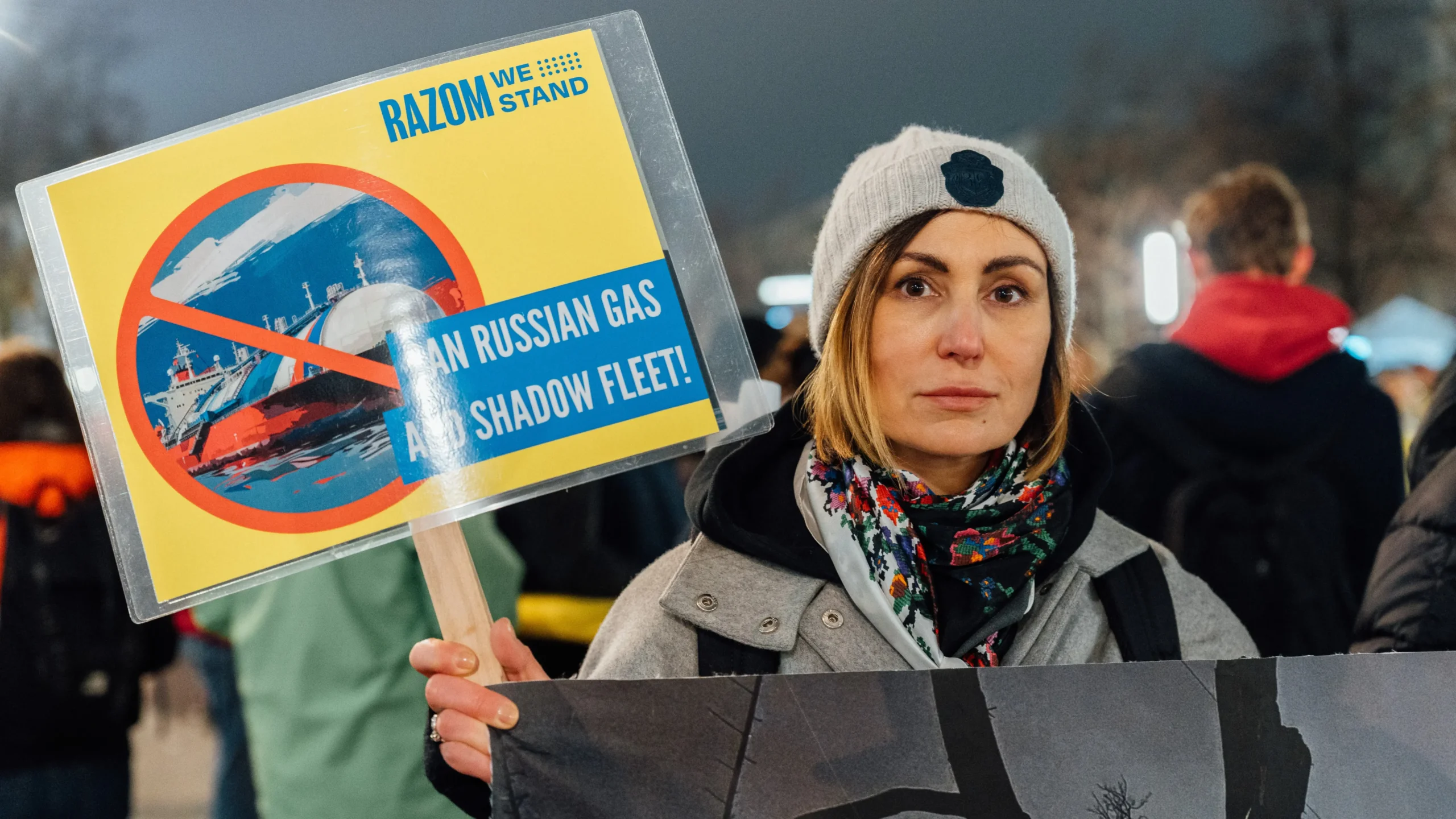
New research, “Yamal LNG: Europe’s Energy dilemma”, reveals a critical loophole in Western sanctions: the continued flow of funds to the Kremlin’s war machine through imports of Russian Liquefied Natural Gas (LNG). The European Union remains the biggest buyer of Russian LNG.
Razom We Stand estimates that the federal tax revenue derived from exports to EU buyers in 2025 would have been sufficient to cover the total cost of the recent large-scale aerial attack Russia launched on Ukraine.
This trade is sustained by long-standing business ties between European companies and the Yamal LNG project. TotalEnergies, a French energy giant, owns 20% of the project and also buys a large share of its gas. Similarly, SEFE, a German state-owned company, is a key offtaker, illustrating direct government reliance on the LNG export revenue stream for the Kremlin. Yamal LNG also depends heavily on Western-operated infrastructure, including specialized icebreaking tankers and key European ports.
With other Russian LNG projects now restricted by sanctions, Yamal LNG has become the sole export pathway into Europe. This keeps giving Moscow financial power and leverage.
Japan’s Mitsui O.S.K. Lines’ fleet has also been actively engaged in transporting gas from Yamal LNG, operating several LNG carriers specifically used for the project. Between January and June 2025, vessels under MOL’s management transported around 28%, 2.8 million tonnes of Yamal LNG’s total cargoes, valued at over €1.4 billion
The current enforcement mechanisms reveal glaring gaps, permitting European financial institutions and corporations to effectively sustain Kremlin funding for the war, despite official policies urging a phased decline. The EU’s current target to end Russian gas imports by January 2028, though the Parliament advocates for an earlier 2027 deadline, risks prolonging Russia’s ability to finance the war and costing Ukrainian lives.
Download new research to learn more.