On 8–9 October, governments, companies and civil society from across the extractive sector gathered in Brussels for the 10th Extractive Industries Transparency Initiative (EITI) Global Conference. Razom We Stand’s Policy Specialist in energy transition, Our Campaigner on Energy Transition Minerals (ETMs),
Javier Casas, was there to represent Razom We Stand. The question running through every session was simple: what is transparency for, if it does not change how natural resources are governed?
The conference came as the race for critical minerals, shifting energy markets and new industrial policies reshape the sector. What follows are the themes that stood out.
Mineral security depends on good governance
Demand for the minerals behind clean energy, advanced manufacturing and defence is redrawing relations between producing and consuming countries. Governments are under pressure to fast-track licences and sign strategic deals quickly. Yet diversifying supply alone does not deliver security. Long-term partnerships depend on transparent agreements, credible institutions and public trust. Producing countries also need the information and negotiating capacity to secure a fair deal.
Traceability is not accountability
Knowing where a mineral comes from does not tell you whether communities were consulted, environmental damage was managed or benefits were fairly shared. The session Responsible Is Reliable made that distinction clear. Traceability has to connect to risk-based due diligence, public oversight and action on the risks it reveals. Participants also warned that a growing patchwork of standards and certification schemes could burden producing countries and artisanal miners. The goal is not more systems, but better-connected information.
Extraction alone does not build prosperity
Too often, mining happens in one country while refining, manufacturing and technology development happen elsewhere. The energy transition is a chance to change that, but reserves are not enough. Domestic value creation needs infrastructure, energy, skills and strong institutions. Investment should be judged by its contribution to public revenues, jobs and local communities, not only by capital raised or tonnes produced.
Transparency has to become impact
The closing plenary looked ahead to EITI’s next phase towards 2029. Publishing data is no longer enough. Participants pointed to what needs to change:
- simpler disclosure, so multistakeholder groups spend more time using data than producing reports;
- connected, accessible information on licences, contracts, ownership and revenues;
- stronger protection for civic space, especially where civil society is under pressure;
- a real voice for Indigenous Peoples and local communities, beyond formal consultation.
The question of how much
One intervention challenged the assumption that rising demand for minerals must be met by ever-expanding extraction. Recycling, material efficiency, lower energy demand and innovation deserve a central place in the debate. Responsible mineral governance is not only about how we mine, but how much.
Beyond the sessions
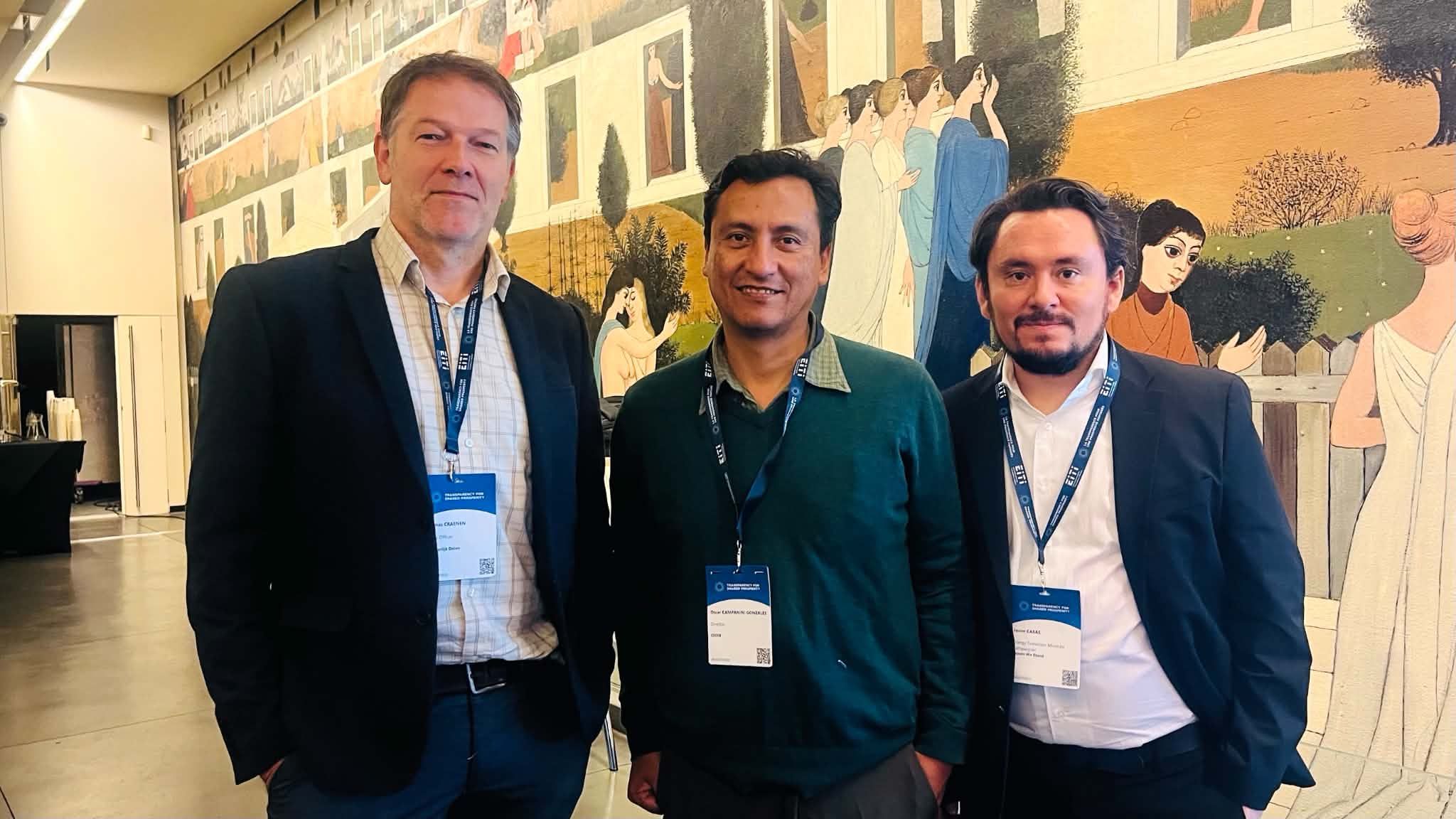
Alongside the formal programme, Javier connected with key partners including Luca Maiotti (OECD), Olena Pavlenko (DiXi Group), Eka Iakobishvili (Open Society Foundations), Thomas Croenen (Broederlijk Delen), Oleksiy Orlovsky (International Renaissance Foundation) and Miguel Ángel Ortiz (Instituto Ecos / GDIAM), laying the groundwork for future collaborative work
For Ukraine, where critical minerals are increasingly part of reconstruction and international partnerships, these debates are far from abstract. Our message is clear: mineral security built without transparency, accountability and community voice will not last. The real test of Brussels is what governments, companies and civil society do differently now.
Our thanks to the EITI for convening such a timely and important conference, and to everyone who shared their insights with us.