Maksym Gardus, Kateryna Kontsur
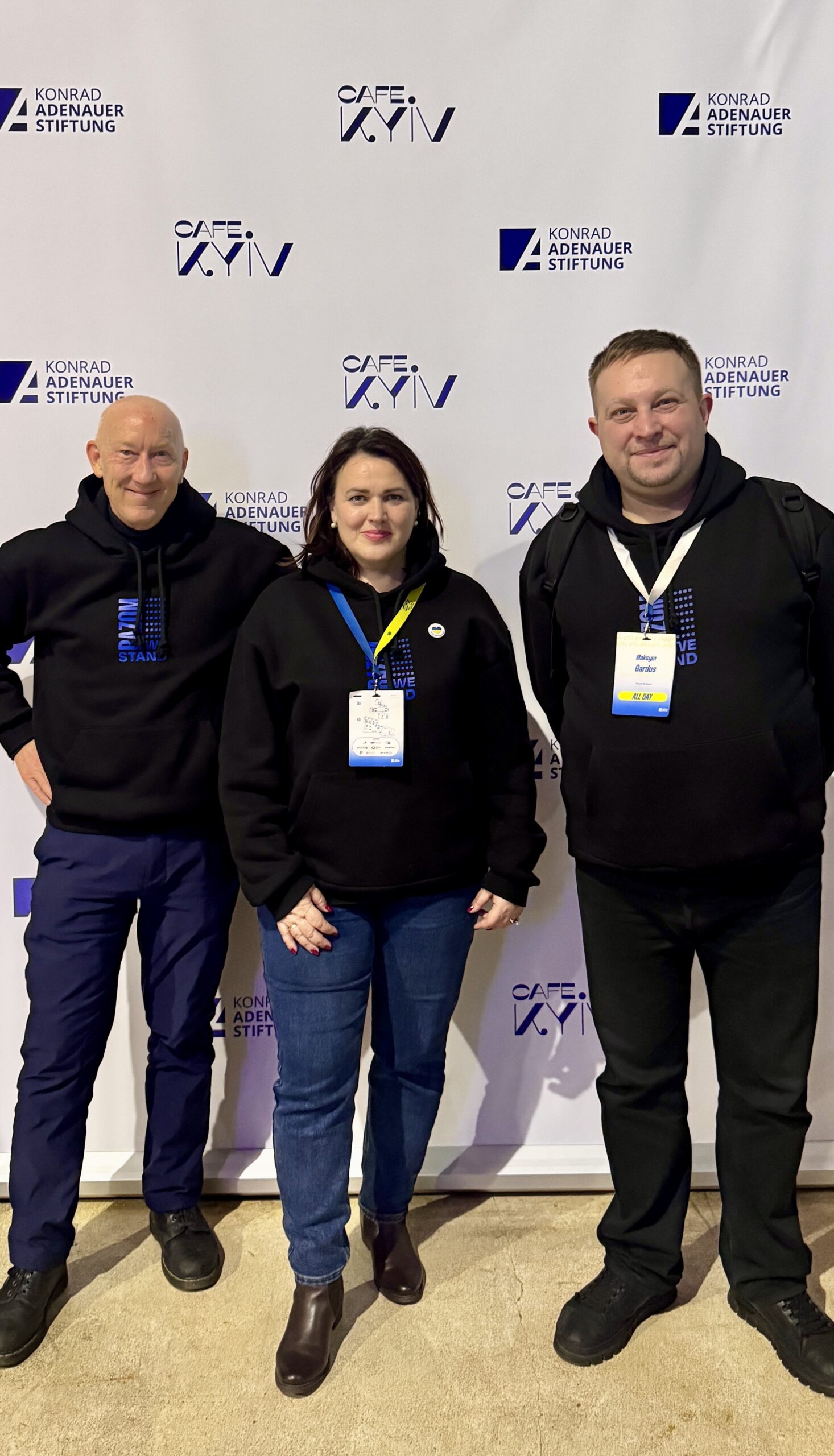
Café Kyiv in Berlin became a platform where Ukraine’s energy sector was discussed not only as a key sector of the economy under attack, but also as a future element of European energy security. For Razom We Stand, the key question was: can Ukraine move from a logic of emergency survival to a model of strategic contribution to the implementation of EU goals – through the export of clean electricity and the scaling up of decentralised renewable energy sources?
The system is under pressure – but not broken
During the discussion panels at Cafe Kyiv, participants clearly outlined the real picture. The current peak demand for electricity production in Ukraine is around 18 GW, while the capacity deficit reaches 9 GW. Large thermal power plants and network substations have been systematically attacked, reducing the volume of dispatching generation and increasing the financial vulnerability of companies.
At the same time, international support has already yielded tangible results:
- 7.7 million people are provided with energy and heat thanks to the equipment supplied. A significant part of the new generation is renewable energy sources (wind and solar power);
- 11,000+ specialists have been trained in energy efficiency;
- 51 reforms related to European integration have been supported.
But these achievements are only a starting point. They do not solve structural problems.
In discussions with GIZ, Green Deal Ukraina, the European Climate Foundation and other partners, key barriers were identified:
- Grid bottlenecks – the complexity of integrating new capacities.
- Weak institutional capacity – from regulation to project quality control.
- Staff shortages – lack of engineers, operators and managers.
- The need for industrial decarbonisation and a consistent industrial policy aimed at localising key technologies and integrating them into EU value chains.
- Financial constraints and poor coordination of instruments.
The ‘vicious circle’ of municipal projects is particularly acute: without ready documentation, there is no funding, and without funding, documentation is not prepared.
Despite the war, renewable energy is developing at a record pace
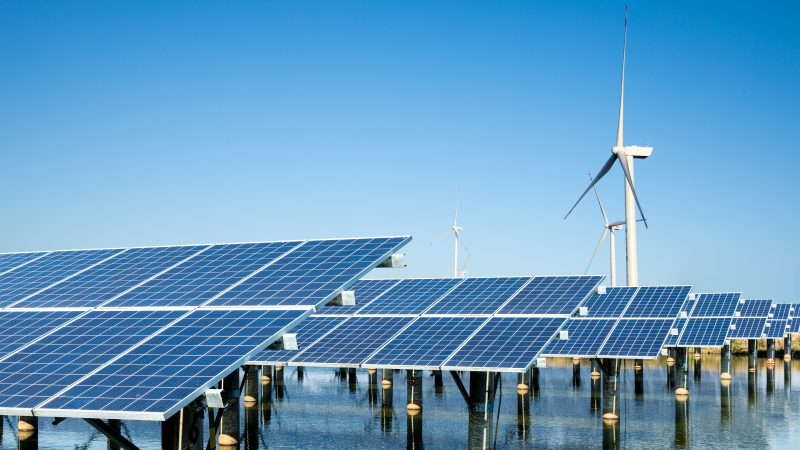
A separate emphasis is on the role of decentralised renewable energy.
In 2025 alone, the following will be installed:
- 1,500 MW of new decentralised solar generation;
- 324 MW of new wind generation;
- 534 MWh of storage systems.
The payback period for solar project investments for communities and businesses is 6–8 years. This means that investing in renewable energy is no longer partly about achieving abstract climate goals, but is an economically advantageous decision that also provides energy security and community sustainability.
Spring–summer 2026 presents a unique window of opportunity. The growth of solar generation, high levels of hydropower resources, and stable nuclear generation mean that at certain times, low-carbon electricity production may exceed domestic demand.
The paradox is obvious: despite a full-scale war, Ukraine may have a surplus of cheaper clean electricity and, at the same time, a shortage of financial resources.
From aid recipient to clean energy exporter
Experts also discussed a strategic shift in narrative towards a definitively positive framing: Ukraine is not only a victim or object of support, but also a potential supplier of clean electricity to the EU and a player in the energy market.
Technically, Ukraine is already synchronised with the European network. The limitations are political and regulatory: incomplete market integration, export limits, and inertia in decision-making.
If export opportunities are expanded as early as April 2026:
- Ukrainian companies will receive additional income;
- dependence on budget subsidies will decrease;
- there will be an investment signal for the development of new renewable energy and storage facilities;
- the EU will receive an additional volume of low-carbon electricity to stabilise regional markets.
Three practical steps
Based on the discussions at Café Kyiv, we see three systemic solutions.
1. Accelerate market integration and electricity exports.
Full market coupling and predictable rules for cross-border trade between Ukraine and the EU should become part of European energy security policy.
2. Scale up investment in more affordable clean energy, decentralised generation and storage systems.
Focus on communities, critical infrastructure, and district heating. The preparation of project documentation should be financed as a separate eligible expense.
3. Invest in people and institutions.
11,000 trained specialists are a start, but the need is much greater. Without many thousands of engineers, energy managers and systematic coordination of their work, no strategy will work.
The Ukrainian energy system is under unprecedented pressure. But it is also demonstrating its capacity for transformation.
The spring and summer of 2026 could mark the transition from emergency solutions to structural reforms, and Ukraine’s potential to be a global leader in the clean energy transition is great.
Ukraine’s energy security is no longer just a matter of national resilience. It is part of European energy and national security, as well as climate policy. And that is precisely the conversation we brought to Café Kyiv.