Svitlana Romanko, Executive Director of the NGO Razom We Stand (Cтоїмо Разом), PhD in Law
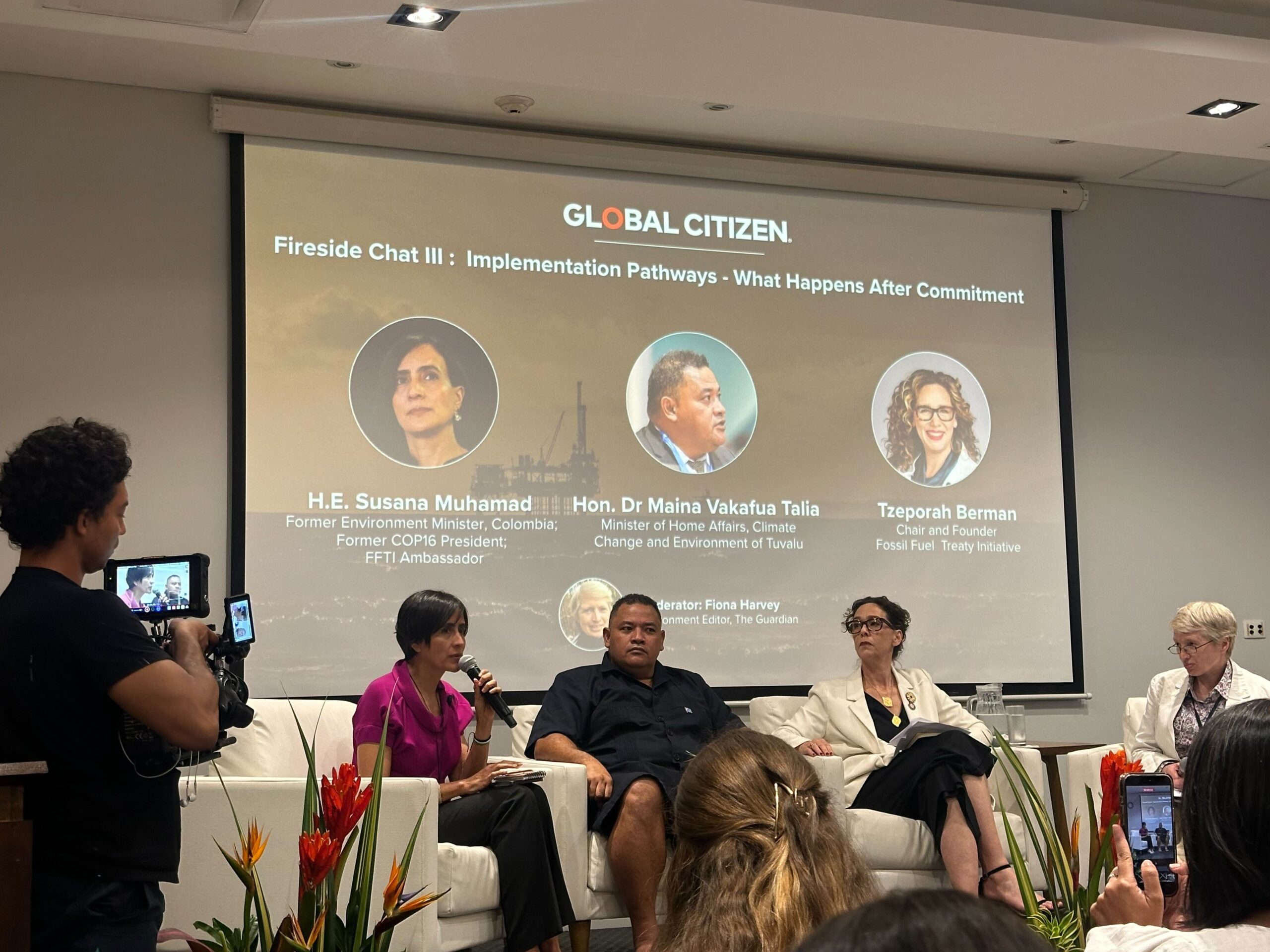
From 24 to 29 April, Colombia’s oldest city and coal port of Santa Marta is hosting the first international conference dedicated to a complete phase-out of fossil fuels and the development of a corresponding multilateral agreement with specific implementation mechanisms. This is the only forum in recent years where there are no oil and gas lobbyists, as at the COP, and where discussions at a global level focus not only on reducing emissions but also on a systemic transition away from oil, gas and coal, and in which the countries of the Global South have a decisive influence. Over 60 countries are participating in the conference, along with representatives from academia, governments, indigenous peoples and civil society. The focus is on specific tools such as restricting new extraction projects in the fossil fuel sector, phasing out fossil fuel subsidies, developing renewable energy and reforming financial mechanisms.
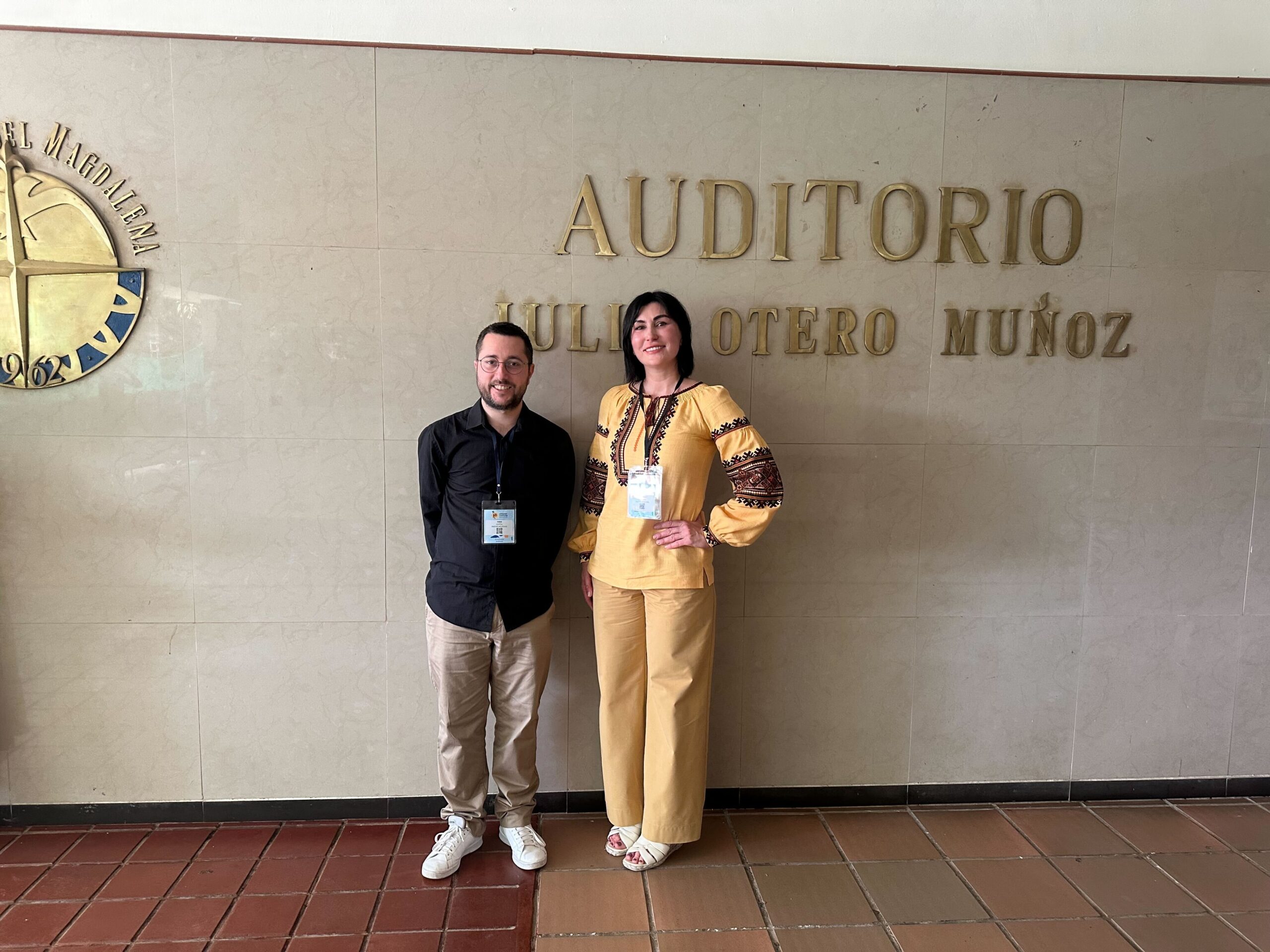
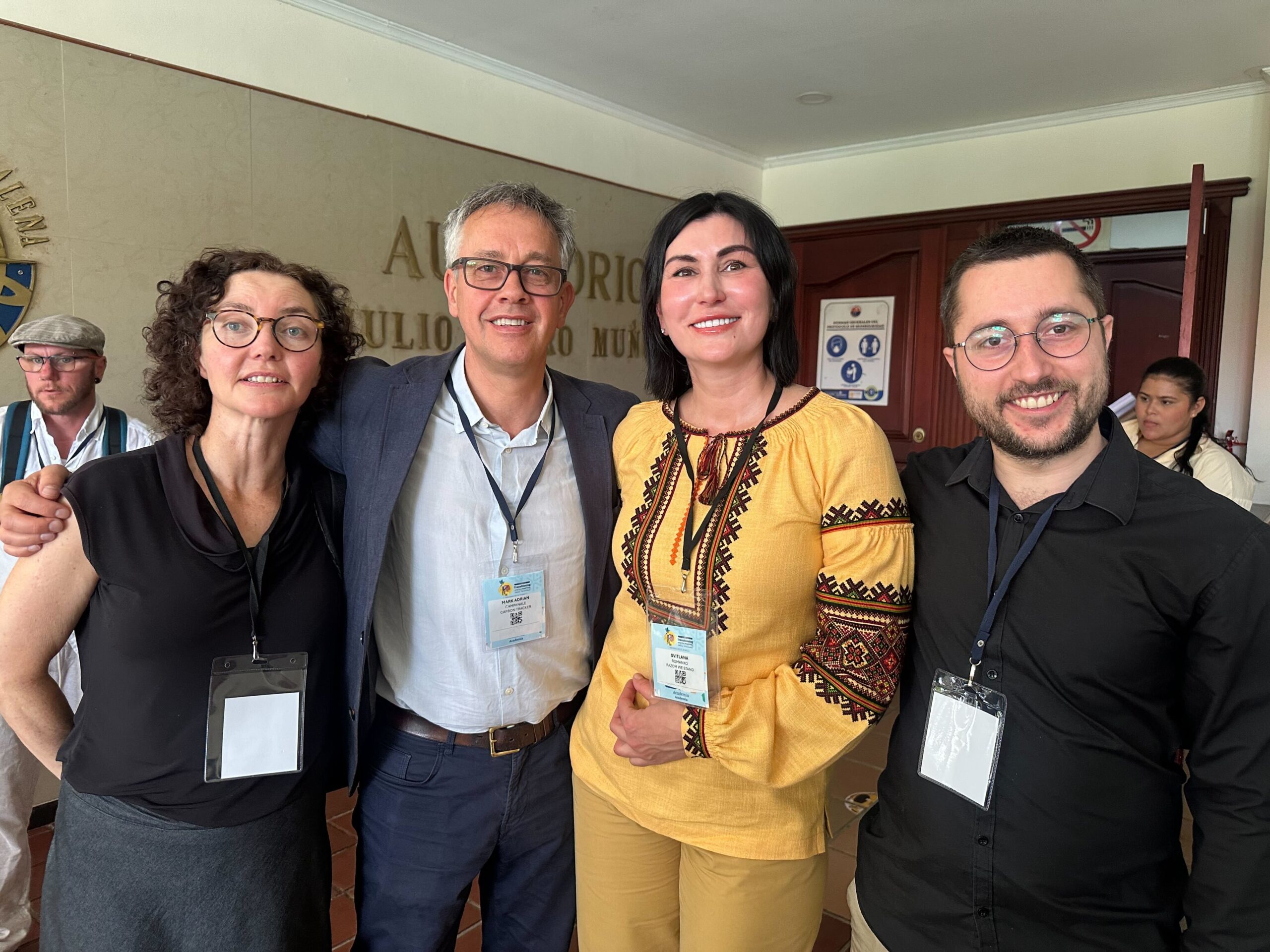
My colleague Iván Hortal-Sánchez and I spent two days working as part of a working group comprising the academic and civil society communities; we took part in several high-level events and a joint working group involving the governments of Colombia and the Netherlands. Some of our recommendations were included in policy documents, and for the next two days our organisation is participating as an observer in the high-level dialogue, alongside just 12 other observer organisations that have passed a rigorous government selection process. We have paid particular attention to our involvement in shaping the Santa Marta Action Repertoire (SMART) approach, which proposes viewing the energy transition as a comprehensive transformation involving simultaneous changes in the economy, politics, finance and international coordination, focusing not only on technologies but also on overcoming structural dependence on fossil resources.
For Ukraine, these discussions are of direct relevance. Revenues from oil and gas remain a key source of funding for the Russian economy and, consequently, the war. Energy policy in this context is directly linked to security issues. At the same time, Ukraine is already in the process of reconstruction, and the decisions taken now will determine the model of development for decades to come.
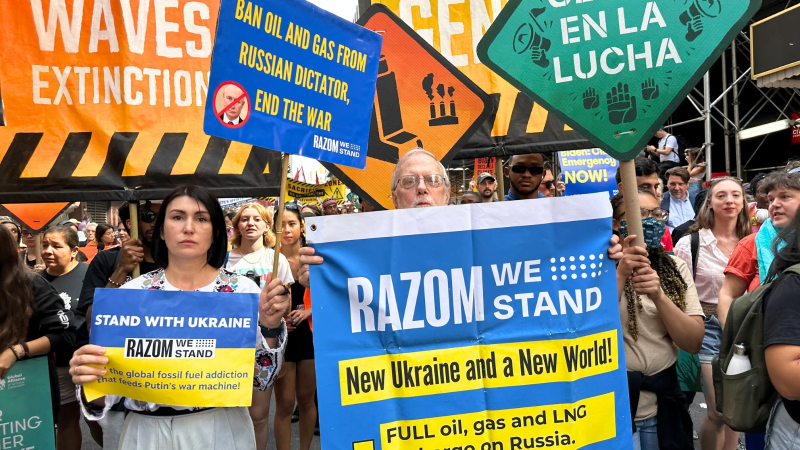
At the same time, Ukraine is not officially represented at the conference in Santa Marta and does not even have observer status. The issues of Russian aggression and the role of fossil fuels in its financing are being raised here only by us – Razom We Stand – without systematic integration into the agenda at the diplomatic level. This negatively affects the perception of Ukraine in the countries of the Global South, which are actively forming a new coalition around the energy transition.
Another problem has become very clear in Santa Marta – double standards in the perception of imperialism: many countries of the Global South still refer to the US as an empire due to its global influence and the dominance of the dollar in international transactions, but are not prepared to call Russia the same, even after its full-scale invasion of Ukraine. As a result, imperialism is condemned very selectively and is not recognised when it is happening right now – through war, occupation and an attempt to destroy our state. The visibility of the Ukrainian position in these discussions is zero, and with it, the already meagre level of support for Ukraine from the Global South is diminishing.
The coalition of countries currently shaping the agenda for phasing out fossil fuels in Santa Marta consists predominantly of nations from the Global South (Brazil, Mexico, Chile, Uruguay, Panama, the Dominican Republic, Kenya, Ghana, Senegal, Tanzania, Uganda, Malawi, Cameroon, Nigeria, Bangladesh, Cambodia, Mongolia, Nepal, Vietnam, the Philippines, Singapore and small island states), alongside European and Western climate leaders (Austria, Belgium, Denmark, Finland, France, Germany, Ireland, Italy, Luxembourg, Norway, Portugal, Slovenia, Spain, Sweden, Switzerland, the UK, the EU), however, a significant proportion of these countries have adopted a neutral stance on Russia’s war against Ukraine or are balancing geopolitical interests, whilst some remain oil and gas producers or are planning to expand production. The individual countries participating in this conference account for 17% of global oil production, 15–18% of global natural gas production, and 6–8% of global coal production.

This means that at the heart of the new climate coalition are now states for which the energy transition is not always linked to issues of security or war, and particularly the war in Ukraine. Colombia’s current president, Gustavo Petro, has openly adopted a so-called neutral stance on Russia’s war against Ukraine, echoing the Russian narrative that this is a war between brothers, fuelled by Western resources, and that he is choosing the economy over sides.
In this configuration, Ukraine’s absence even as an observer has strategic consequences – we are losing the opportunity to influence the shaping of the key narrative that fossil fuels are not only a source of emissions but also the financial basis of Russian military aggression, and we are gradually falling out of the circle of countries that determine the rules of the new energy system, and consequently lose potential access to its funding. The main issues under discussion in Santa Marta remain the cancellation of the debt obligations of Global South countries and the future multi-billion-dollar grant funding for the economic and energy development of developing countries as a measure of climate responsibility on the part of developed nations for their production and use of oil, gas and coal.
It is worth noting that Ukraine is always perceived in such discussions as a country of the Global North–Western, affluent and far removed from, for example, African or Latin American realities. However, this is a misconception and an outdated classification by the World Bank. Over a third of our fellow citizens, or around 8 million Ukrainians, live below the poverty line. Ukraine’s external debt is now approaching levels typical of many countries in the Global South (around 85–90% of GDP), and as of 2024, Ukraine’s external debt was estimated at approximately $180 billion (around 95% of GDP), with total public debt at 88–90% of GDP and a continuing upward trend.
By these indicators, Ukraine is already approaching the group of countries with a high debt burden, characteristic of some states in the Global South. At the same time, the fundamental difference lies in the nature of this debt: Ukraine’s debt is a direct consequence of the war and consists largely of concessional financing from international partners, whereas in many countries of the Global South, debt pressure is structural and accompanied by significantly worse conditions such as high interest rates, short repayment terms and dependence on commercial creditors or commodity exports, particularly oil and gas.
This creates a so-called “debt-extractive trap”, where countries are forced to maintain extraction to service their debt. In a global context, this means that Ukraine already has a debt burden comparable to that of the countries currently forming the new climate coalition, yet finds itself in a fundamentally different starting position. This presents both an opportunity and a risk. The opportunity lies in avoiding the “debt-and-extractive trap”, where debt servicing pushes the economy towards a resource-based model. The risk is that without a clear architecture for reconstruction funding and a priority for clean energy and value-added sectors, Ukraine may recreate the same dependencies, despite the different nature of the crisis.
Western investors are already showing caution about entering complex production chains, which reinforces the tendency for interest to concentrate in the raw materials sectors. That is precisely why the decisions being taken today regarding the financing structure and reconstruction model will have a decisive impact on Ukraine’s economic trajectory in the long term. At the same time, Ukraine’s experience in rebuilding its energy system is highly relevant to this global discussion. The war has demonstrated the vulnerability of centralised energy systems and dependence on external suppliers, but our approach is driven not by the market, as in the case of Pakistan, but by survival. It has also shown how revenues from fossil fuels can be converted into military power.
Another problem remains the lack of a transformative mindset within the Ukrainian government. In the fifth year of the full-scale invasion, there are no breakthrough energy solutions that would systematically lead to a move away from oil, gas and coal. On the contrary, the figures show a continuation of the old model. Total gas consumption remains at around 21–22 billion cubic metres per year, with over a third consumed by households, indicating a deep structural dependence among the population; at the same time, coal consumption remains significant (around 1.7 million tonnes in just one autumn month in 2025), and demand for petroleum products in transport remains consistently high. Against the backdrop of significant losses in generating capacity, the country is increasingly relying on electricity imports, which continue to rise in 2026, compensating for the shortfall in domestic generation.
Even under the pressure of war, there has been no energy transition. Ukraine is not moving towards rapid decarbonisation and energy independence, but is merely adapting the old, fossil-fuel-based model to new crisis conditions. There is a chasm between conferences on Ukraine’s reconstruction and the actual energy transition within the country – a chasm like the Strait of Hormuz, which could be blocked by any geopolitical storm or a clique of corrupt energy officials.
The SMART approach of the Santa Marta conference emphasises that a successful energy transition requires coordination between the energy, infrastructure, industry and finance sectors. This directly applies to Ukraine’s reconstruction, where coordination among levels of government and institutions is vital. Santa Marta has signalled that global energy policy is entering a new phase, with greater emphasis on practical solutions and coordination among countries. It is important for Ukraine to be part of this process, given both the security dimension of energy and the potential for reconstruction as an example of systemic transformation for the Global South.
If this gap is not bridged now through concrete policy decisions, the reallocation of investments and the dismantling of fossil fuel dependency, Ukraine risks losing not only its chance at energy independence, but also the trust of international partners, who increasingly expect measurable results rather than mere declarations. In this sense, the energy transition is no longer a matter of climate or even the economy, but a matter of national security and Ukraine’s place in the new global energy architecture. The next such conference is planned for Tuvalu, which may be challenging logistically, but we believe that nothing is impossible for Ukrainian diplomacy.